What Does Paint Correction Actually Remove? | Ringgold Auto Detail
If you've ever looked closely at your vehicle's paint under direct sunlight and thought, “Dang! Where did all those scratches come from?” — you're not alone.
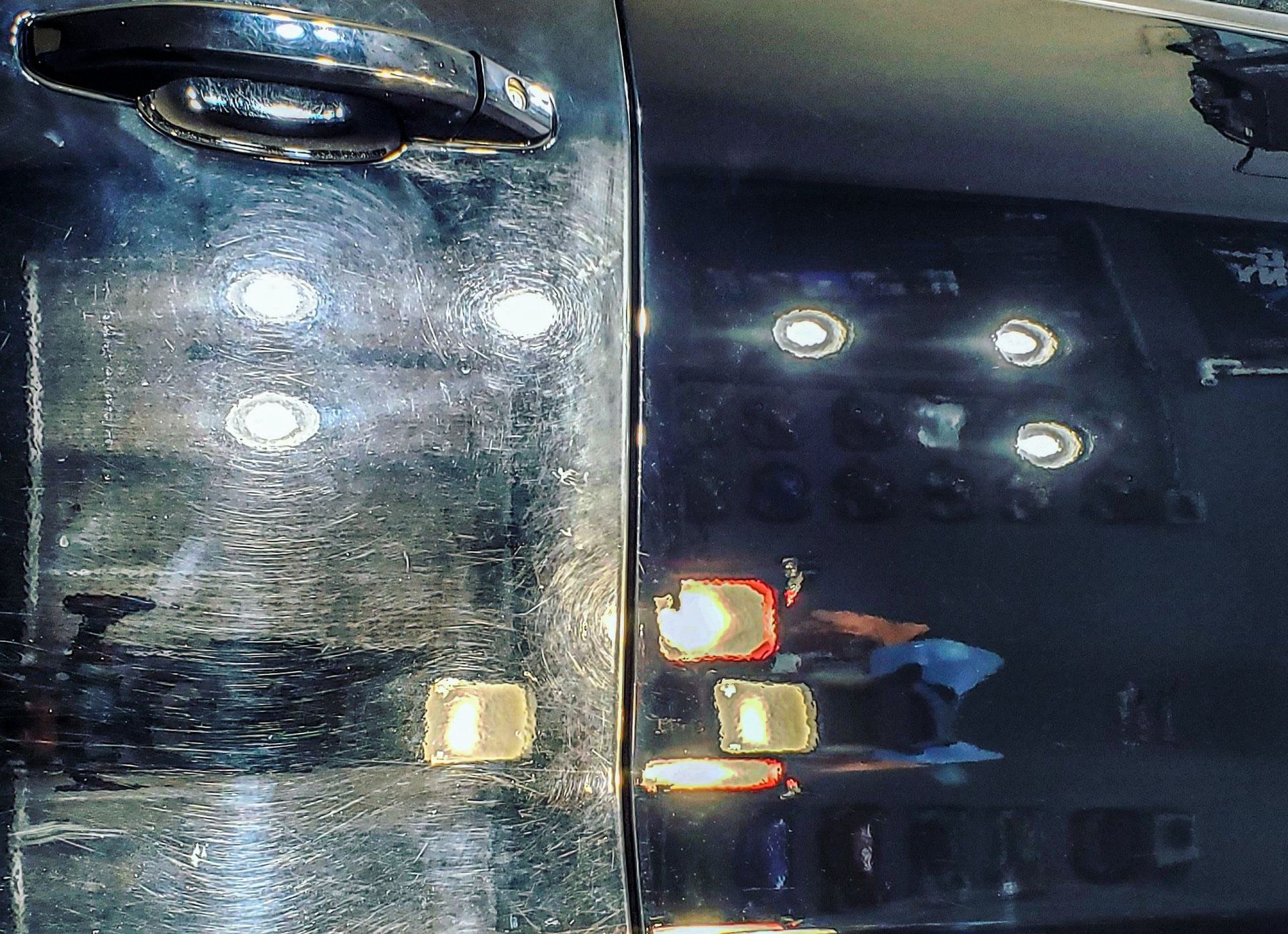
Swirl marks, wash marring, light scratches, water-spot etching, oxidation, haze and other defects slowly build up on automotive paint. Some can be corrected. Some can only be improved. And some are simply too deep to safely polish away.
That's where paint correction comes in.
Paint correction is the controlled process of refining a vehicle's painted surface to reduce or remove defects by carefully leveling the clear coat surrounding them.
It is not a magic eraser.
It is not a chemical that dissolves scratches.
And it isn't simply “making the paint shiny.”
A proper paint correction removes a very small amount of material from the clear coat so that light reflects more evenly from the surface.
The important part is knowing how much can safely be removed — and when to stop.
At Ringgold Auto Detail, serving the Chattanooga, Ringgold and North Georgia area, that distinction matters. The goal isn't to remove every defect at any cost. The goal is to produce the best finish possible while being responsible with the paint you have.
What Can Paint Correction Remove?
Depending on the severity of the defect, the condition of the paint and the amount of usable clear coat available, professional paint correction can remove or significantly reduce a number of common paint defects.
Swirl Marks
Swirl marks are among the most common problems we see.
Despite the name, they aren't necessarily actual circular scratches. They're usually a collection of very fine surface defects caused by washing, drying, wiping or other contact with the paint.
Under normal lighting, they may barely be noticeable.
Put that same vehicle under direct sunlight or strong inspection lighting, and suddenly the paint looks hazy instead of deep and clear.
Proper polishing can dramatically reduce or remove this type of marring.
This is one of the areas where paint correction can make an enormous visual difference without requiring an aggressive process.
Light Scratches and Surface Marring
Paint correction can also address many light scratches that remain within the clear coat.
Here's the important distinction:
Not every scratch is the same depth.
Automotive paint is a layered system. A simplified version looks something like this:
Clear coat → Base coat/color → Primer → Metal or substrate
If a scratch is only affecting the clear coat, there may be enough material surrounding the defect to level the surface and greatly reduce or remove its appearance.
If the scratch has penetrated through the clear coat and into the color layer, polishing isn't going to magically replace the missing paint.
That's when expectations need to change.
A professional should be able to tell you the difference.
Can Paint Correction Remove Deep Scratches?
Sometimes a deep-looking scratch can be substantially improved. Sometimes it cannot.
That's why we don't recommend judging a scratch solely by looking at it from across the parking lot.
The real question is:
How deep does the defect actually go?
Some isolated defects can be reduced through more aggressive correction techniques or, where appropriate, carefully controlled wet sanding.
But there is a limit.
If removing the defect would require taking an unreasonable amount of clear coat off the vehicle, leaving some of the scratch behind is often the smarter decision.
That may not sound like the answer somebody wants to hear.
It's the answer I'd rather give them.
Your vehicle only has so much paint.
Once you remove it, you don't get to polish it back.
Water Spots and Mineral Etching
Water spots are another area where paint correction can help — but again, severity matters.
Fresh mineral deposits sitting on top of the paint are different from mineral deposits that have actually etched into the clear coat.
A surface contaminant may be removed through cleaning and chemical decontamination.
An etched water spot is different.
If the mineral has damaged the surface, polishing may be required to level the affected area and restore clarity.
Light to moderate etching can often be significantly improved through paint correction.
Severe etching may require more aggressive correction, and in extreme cases the defect may not be safely removable.
This is one reason simply throwing a machine polisher at every water spot isn't a great strategy.
First figure out what you're actually dealing with.
Oxidation and Dull Paint
Older or neglected paint can develop oxidation and lose much of its clarity and gloss.
The result is often a dull, chalky or hazy appearance.
Depending on the condition of the paint, correction can dramatically improve this.
But there is an important distinction between oxidized paint that can be corrected and paint that is already failing.
If the clear coat is peeling, delaminating or otherwise failing, polishing isn't going to repair it.
That's a body-shop problem, not a detailing problem.
Knowing when a vehicle needs a different type of repair is part of doing the job correctly.
Dealership Marring and Poor Previous Polishing
Not every vehicle arrives at a professional detailing studio covered in years of neglect.
Sometimes the damage is relatively new.
We've seen vehicles that have been improperly washed, aggressively wiped down, poorly polished or “detailed” before delivery.
The vehicle may be brand new to the owner and still have paint defects.
New does not automatically mean perfect.
Likewise, a vehicle that has already been polished isn't necessarily finished.
Previous polishing can leave behind:
- Holograms
- Buffer trails
- Micro-marring
- Uneven correction
- Compound residue
- Other finishing defects
These can often be corrected through a properly planned polishing process.
What Paint Correction Cannot Remove
This is just as important as knowing what it can remove.
A reputable paint correction professional shouldn't promise that every defect will disappear.
There are some things polishing simply isn't designed to repair.
Rock Chips
A rock chip removes paint.
Polishing doesn't put that missing paint back.
A chip may require touch-up or a different repair process.
Scratches Through the Clear Coat
If a scratch has gone through the clear coat and into the color layer, conventional paint correction cannot simply remove the missing material.
In some cases, the appearance can still be improved.
But “improved” and “completely removed” are not the same thing.
Peeling or Failing Clear Coat
If your clear coat is peeling or separating from the surface, polishing it isn't going to fix the underlying failure.
In fact, aggressive polishing of failing paint can make an already bad situation worse.
Damage Into the Base Coat
Once a defect reaches the color layer, there is no amount of polishing that will recreate the missing pigment.
At that point, you're outside the normal scope of paint correction.
So How Does Paint Correction Actually Work?
This is where the process becomes more interesting.
A professional paint correction isn't simply:
Put compound on pad → turn machine on → make scratches disappear.
Before correction begins, the vehicle needs to be properly cleaned and decontaminated.
Then the paint needs to be inspected.
At Ringgold Auto Detail, the correction process includes evaluating the condition of the finish and measuring paint thickness so that the correction strategy can be based on the vehicle in front of us rather than a one-size-fits-all recipe.
From there, the process can involve different combinations of:
- Compounding
- Polishing
- Refinement
- Wet sanding of appropriate isolated defects
- Multiple machine polishing stages
- Final jeweling or finishing work
The exact combination depends on the vehicle.
Paint hardness matters.
Paint condition matters.
Previous correction matters.
Clear-coat thickness matters.
The customer's desired result matters.
That's why two vehicles that look similar from ten feet away can require completely different amounts of work.
Why Can't You Just Polish Until Every Scratch Is Gone?
Because the clear coat isn't infinite.
This is probably the most important thing for a vehicle owner to understand about paint correction.
Every time you aggressively correct a defect, you're potentially removing some of the surrounding clear coat.
If you continually chase every last imperfection, you eventually reach a point where the pursuit of perfection becomes more damaging than the defect you're trying to remove.
That's not good paint correction.
That's just removing paint because you can.
The best correction is the one that produces the result you want while preserving as much usable paint as reasonably possible.
Sometimes that means accepting a defect that remains visible under certain lighting.
I'd rather leave a deep scratch slightly visible than remove an irresponsible amount of clear coat just so I can say:
“We got it 100%.”
How Much Paint Correction Does Your Vehicle Actually Need?
There isn't one answer.
Some vehicles respond beautifully to a relatively mild polishing process.
Others have years of washing damage, deeper scratches, oxidation or previous improper work that require considerably more time.
That's why professional paint correction should begin with an evaluation.
At Ringgold Auto Detail, our current correction options range from a two-step Paint Enhancement to a much more involved Full Paint Correction, with specialized show-car correction available for vehicles where the goal goes considerably beyond normal daily-driver correction.
Our Paint Enhancement is designed around a substantial improvement in the overall finish without chasing every possible defect.
Our Full Paint Correction is a much more involved process using multiple stages of correction and refinement.
And our show-car work is an entirely different animal.
The right package isn't the one with the biggest number of steps.
It's the one that makes sense for the paint and the owner's expectations.
What About a Brand-New Vehicle?
Here's another common misconception:
“It's a new car, so the paint should be perfect.”
Unfortunately, that's not always how it works.
New vehicles can arrive with transport marring, dealership washing marks, factory finishing defects and other surface imperfections.
That doesn't mean every new vehicle needs an aggressive paint correction.
Quite the opposite.
A new vehicle should be inspected first.
If the paint is already in excellent condition, there may be no reason to perform a major correction.
If it has light marring or other defects, a light polishing process may be enough.
And if there are deeper defects, the owner can decide whether correcting them is worth the additional work.
This is especially important if you're planning to install a ceramic coating.
A coating doesn't repair the paint underneath it.
It becomes the finish you put over whatever condition the paint is in when the coating is installed.
That's why proper preparation matters.
Paint Correction Isn't About Making Every Defect Disappear
This is probably the biggest misconception I want to clear up.
The goal of professional paint correction isn't necessarily:
100% defect removal.
The goal is:
The best possible finish within a responsible correction strategy.
Those aren't always the same thing.
A vehicle can look dramatically better without every single defect being removed.
In fact, depending on the vehicle and its history, that may be the better result.
A good correction process balances:
Appearance + defect reduction + paint preservation.
That's the part you don't always see in the before-and-after photos.
How Do You Know What Your Paint Needs?
You don't need to become a paint-correction expert before bringing your vehicle in.
That's part of the reason professional evaluation exists.
If you're in the Chattanooga or Ringgold area and you're considering paint correction, the first step should be determining:
- What defects are actually present?
- How severe are they?
- How much correction is realistically possible?
- How much correction is actually worth doing?
- What level of finish are you trying to achieve?
- Are you planning to apply a ceramic coating afterward?
Those answers determine the appropriate process.
Not a generic package somebody picked from a menu.
The Bottom Line
So, what does paint correction actually remove?
It can remove or substantially reduce many surface-level defects, including:
- Swirl marks
- Wash marring
- Micro-marring
- Light to moderate clear-coat scratches
- Certain water-spot etching
- Oxidation and dullness
- Holograms and improper polishing marks
But it cannot magically repair:
- Rock chips
- Missing paint
- Deep scratches through the clear coat
- Failing or peeling clear coat
- Damage extending into the base coat
And even when a defect technically can be removed, that doesn't automatically mean it should be.
The best paint correction isn't the one that removes the most paint.
It's the one that produces the best result while respecting the paint that's left.
That's the philosophy I take into every vehicle that comes through Ringgold Auto Detail.
If you're considering paint correction in the Chattanooga or Ringgold area, contact Ringgold Auto Detail for an evaluation. We'll look at the vehicle, talk through what you're trying to accomplish, and tell you what I believe actually makes sense for the paint — even if that means telling you that you don't need the most aggressive package.
Contact Us
Share with your friends